 Deer Creek Lendings
Deer Creek Lending Pet Care Loans for Vet Bills
An emergency surgery or a long course of treatment can arrive without warning. A personal loan lets you say yes to care now and repay on a fixed schedule.
- How it works
- Typical costs
- Amounts & terms
- Ways to pay
- Lender review
- How to request
- Worked example
- Ask your vet
- Plan ahead
- Your budget
- FAQ
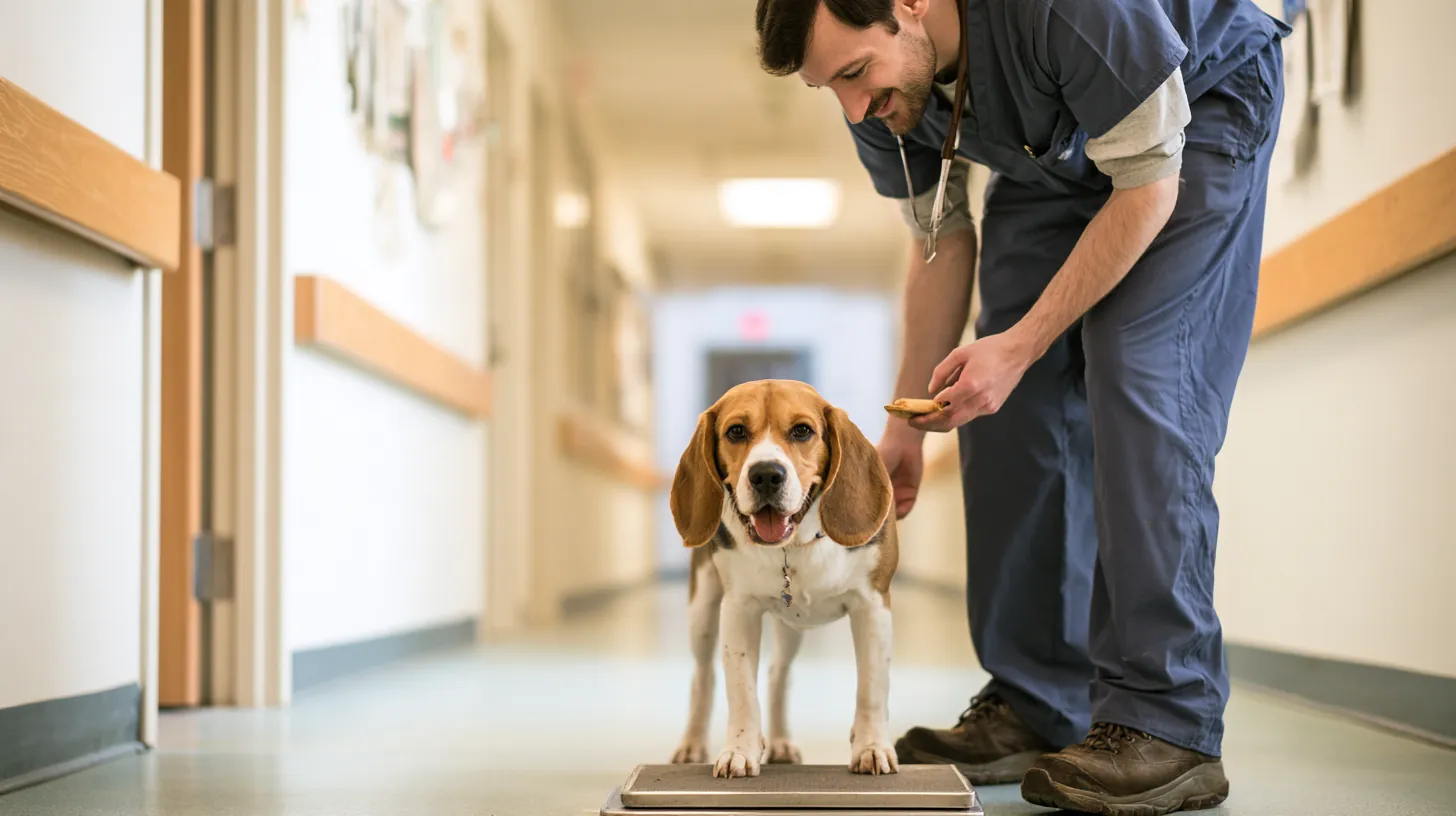
How a pet care loan works
A pet care loan is a personal loan used for veterinary costs: the lender deposits a lump sum, you pay the clinic, and you repay the lender in fixed monthly payments. Because the money comes to you, it works at any licensed veterinarian, including emergency and specialty hospitals.

Vet clinics usually expect payment when care is delivered. Unlike human hospitals, few offer long payment plans, and many ask for a deposit of 50% or more before surgery. That is why pet owners searching Deer Creek Lending pet care options often need money within a day or two, and why knowing the steps ahead of time helps.
A personal loan is one of several ways to cover a vet bill. Pet insurance reimburses part of the cost after you pay, veterinary credit cards offer short promotional periods, and some clinics accept third-party payment plans. A loan fits best when the bill is too large for savings, insurance will not cover it, and you want a fixed end date without a deferred-interest deadline.
Our network includes lenders that consider a range of credit profiles. The final rate and amount depend on your income, credit history and state, and you can review every offer before you agree to anything.
What common vet procedures cost
Veterinary costs vary widely by region and clinic, but emergency visits often start at $150 to $300 before tests, and surgeries commonly run from $1,500 to $6,000. Getting a written estimate is the first step before deciding how to pay.
| Procedure or visit | Common range (estimate) | Notes |
|---|---|---|
| Emergency exam and X-rays | $300 – $900 | After-hours fees add $100 or more |
| Dental cleaning with extractions | $600 – $1,800 | Depends on the number of teeth removed |
| Foreign-body removal surgery | $2,000 – $5,000 | Includes anesthesia and hospital stay |
| Cruciate ligament repair (dog) | $3,000 – $6,000 | Per knee; specialty surgeons cost more |
| Urinary blockage treatment (cat) | $1,500 – $4,000 | Often several days of hospitalization |
| Diabetes diagnosis and first month | $500 – $1,500 | Ongoing insulin and checks after |
These ranges come from what owners typically report and from published clinic price surveys; your clinic's estimate is the only figure that matters for your request. Ask for a low-to-high estimate, which most hospitals provide, and plan your loan around the high number if you can afford the payment.
How much people borrow and typical terms
Pet care requests through our network usually fall between $1,000 and $4,000 with terms of six to 24 months. Shorter terms make sense for one-time emergencies because the cost does not repeat.
$500–$1,500
Typical terms: 3–12 months
An emergency exam with X-rays, a dental cleaning with extractions, or treatment for an infection.
See the $1,000 loan page →$1,500–$3,000
Typical terms: 6–18 months
Foreign-body surgery, a broken leg repair, or several days of hospitalization.
See the $2,000 loan page →$3,000–$5,000
Typical terms: 12–24 months
Cruciate ligament surgery, a specialist referral, or a long treatment plan.
See the $5,000 loan page →A $2,500 vet bill financed at 24% APR runs about $236 a month over 12 months, with roughly $337 in interest. Over 18 months the payment falls to about $167, but interest rises to roughly $502. If your pet will need ongoing medication, include that monthly cost in your budget before you choose a term. The personal loan calculator can help you test both.
Pet care loans compared with other ways to pay
Pet owners can pay a large vet bill with savings, pet insurance, a veterinary credit card, a clinic payment plan, or a personal loan. Each carries different costs and timing, and many owners combine two of them.
| Option | Typical cost (estimate) | Timing | Watch out for |
|---|---|---|---|
| Pet insurance | Monthly premium; 70%–90% reimbursed after deductible | Reimbursed after you pay | Pre-existing conditions excluded; waiting periods |
| Veterinary credit card | 0% promo, then about 27%–32% deferred interest | Instant at participating clinics | Back interest if promo balance is not cleared |
| Clinic payment plan | Often a fee or small interest | Varies; rare for large bills | Short terms and deposit requirements |
| Personal loan through our network | About 6%–35.99% APR | Funds often in 1–2 business days | Higher rates for rebuilding credit |
If you have pet insurance, a short personal loan can bridge the weeks between paying the clinic and receiving reimbursement. Many owners repay most of the balance as soon as the claim pays out, which keeps interest low. Ask the lender to confirm there is no prepayment penalty before you sign.
What lenders look at for a pet care request
Lenders review pet care requests the same way they review any personal loan: income, credit history, existing debts and recent banking activity. The purpose of the loan does not change the criteria, but stating it clearly helps.
Most lenders want a steady income source, a checking account in your name, and a debt-to-income ratio that leaves room for the new payment. Fair or rebuilding credit is considered by some lenders in our network, with rates that reflect the added risk. People who check Deer Creek Lending requirements for pet care can find the full details on our eligibility page.
Lenders do not need the vet's estimate or your pet's records. Keep those for your own planning and for any insurance claim.
How to request a pet care loan quickly
To request a pet care loan quickly, get a written estimate from the clinic, request the high end of it through our form, and compare any offers. Many lenders fund within one to two business days after you sign.
- Get the estimate. Ask for a written low-to-high range and what deposit the clinic needs today.
- Ask about timing. Many clinics will start treatment with a deposit while funding is pending.
- Send one request. Our form passes your details to lenders in our network at no cost.
- Pay the clinic. When funds arrive, settle the balance and keep the itemized invoice for insurance.
When an emergency happens at night or on a weekend, most lenders process requests the next business day. In that case, the clinic deposit may need to go on a card while the personal loan covers the remaining balance. Starting a Deer Creek Lending application right away gives you the earliest possible place in that queue.
Worked example: a $3,400 surgery estimate
A worked example shows how a deposit, insurance and a short personal loan can fit together: a $3,400 surgery estimate becomes a $2,800 loan when savings cover the deposit, and the payment drops further once an insurance claim pays.
Picture a dog owner whose retriever swallowed part of a toy. The emergency hospital estimates $2,600 to $3,400 for surgery and two nights of care and asks for a $600 deposit. The owner pays the deposit from savings, then sends a Deer Creek Lending request for $2,800 to cover the rest of the high estimate.
| Offer | APR | Term | Monthly payment (estimate) | Total interest (estimate) |
|---|---|---|---|---|
| Lender A | 20% | 12 months | about $259 | about $313 |
| Lender B | 26% | 18 months | about $190 | about $611 |
The final invoice comes to $3,100, so $2,500 of the loan is used and the remaining $300 goes straight back toward the balance. Six weeks later, pet insurance reimburses 80% of the covered cost after a $250 deductible, and the owner applies most of that check to the loan as an early payment. Because Lender A charges no prepayment penalty, the remaining balance is small and the total interest ends up far below the table figure.
Had the owner chosen Lender B for its lower payment, the same early payoff would still have worked, but only if the agreement allowed it without a fee. That single question about prepayment can matter more than a few points of APR.
Questions to ask your vet about cost
Asking your vet about cost is normal and helps you borrow the right amount: request a written estimate, ask what is urgent versus optional, and check whether staged or outpatient care is possible.
- What is the low and high estimate, and what drives the difference? Complications and hospital days usually explain the gap.
- What must happen today, and what can wait? Pain control and stabilization may come first, with diagnostics or surgery scheduled after.
- Is there a less intensive option? Some conditions can be managed with medication or outpatient care at lower cost.
- What deposit do you need, and when is the balance due? This tells you how fast the personal loan must fund.
- Will you help with insurance paperwork? A completed claim form speeds up reimbursement.
People comparing Deer Creek Lending options for vet bills often find that these questions lower the amount they need to request by several hundred dollars, which lowers the payment and interest on every offer.
Planning for the next vet bill
Planning ahead for vet costs means setting aside a monthly amount, considering insurance while your pet is young and healthy, and knowing your clinic's payment rules before an emergency. A small fund turns the next crisis into a bill instead of a scramble.
- Price insurance early. Premiums are lower and fewer conditions are excluded when a pet is enrolled young.
- Keep a pet fund. Even $40 a month builds nearly $500 in a year, enough to cover most exam-and-test visits.
- Know your nearest emergency hospital. Ask your regular vet which after-hours clinic they work with and what it charges for an exam.
- Ask about wellness plans. Some clinics bundle vaccines and checkups into monthly fees, which smooths routine costs.
Owners who compare Deer Creek Lending rates for a single surgery often decide to keep making a smaller "payment" into savings after the loan ends. Our guide to budgeting for pet care costs has a simple plan you can copy.
Caring for your budget as well as your pet
A vet bill can bring hard choices, and it is worth deciding what you can afford before the decision has to be made in a waiting room. Talking frankly with your vet about treatment options and costs is normal and expected.
Many vets can suggest a staged plan, such as stabilizing a pet today and scheduling a procedure in a week, which gives time to compare a Deer Creek Lending request with insurance or savings. Ask what each option involves, what it costs, and what the likely outcome is. Choosing a payment you can sustain protects both your pet's ongoing care and your own finances. When you are ready, start a request on our apply page.
Frequently asked questions
Can I use a pet care loan at any veterinarian?
Yes. The lender deposits money into your account, so you can pay any licensed clinic, including emergency hospitals and specialists.
Can I get a loan for a pet that is already sick?
Yes. Unlike pet insurance, a personal loan does not exclude pre-existing conditions because the lender looks at your finances, not your pet's health.
How fast can I get money for an emergency vet visit?
Many lenders fund within one to two business days after you sign, and some faster. Ask the clinic whether a deposit will let treatment start while funding is pending.
Should I pay off the loan when my insurance claim pays out?
If your loan has no prepayment penalty, using the reimbursement to pay down the balance reduces your total interest. Confirm the early payoff terms in your agreement.
Does pet insurance reimburse the interest on a loan?
No. Pet insurance reimburses eligible veterinary charges, not financing costs. Keeping the loan term short, or paying it down when the claim arrives, is the best way to limit what the interest adds to the bill.
Explore other loan types & amounts
Loan types
Loan amounts
Ready to see what lenders can offer?
One short request reaches lenders in our network. It's free to use and you're never obligated to accept an offer.